www.gligorindragana.blogspot.com

среда, 21. август 2013.

TESLA

TESLA, the forthcoming Nikola Tesla biopic, will be a landmark project for Serbia and will provide a long overdue reappraisal of the great revolutionary thinker, scientist and humanitarian (report: WILD ROOSTER).

That is my considered opinion after many months of working as Associate Producer on TESLA (@TeslaTheMovie), the Balkans’ most talked-about film, which will shoot in Serbia and the United States, in coming months.

The phenomenal reaction to our planned film points to TESLA being an international milestone in the legacy of the Serb scientist. It will detail the life and works of Nikola Tesla, showing a man who was one of the greatest minds of the twentieth century.

As well presenting Tesla as a great scientist, the film will highlight Tesla as a revolutionary thinker and humanitarian. It will also show Tesla as a man who has been wronged by history, sidelined by the manipulations of men in power.

Michael Anton Breathes Life into Nikola Tesla

Director Michael Anton has produced a tight script that represents Tesla in the most truthful light yet, covering key periods in his eventful life, mostly in the US but also in emotional scenes at home with his mother and sisters.

Michael’s excellent writing breathes life into the great man, without resorting to any unnecessary exaggerations of his character. The truth will be more than enough in Tesla’s story.

It is not surprising that the integrity of Michael’s script has played a big part in attracting our notable cast of acclaimed regional and international actors. Unlike some productions that would seem destined to remain real only in the mind of the would-be producer, we do not need to speculate or make unfounded claims about our cast for the sake of publicity. Our project, our cast, is the real deal.


Key scenes featuring Nikola and his family will be shot in Serbia, with a strong cast of well-known local actors speaking in Serbian. But, for us, Serbia is not just a backdrop to the story. Our reason for shooting in Serbia is out of respect for Tesla’s Serb heritage and to represent his story with authenticity. Tesla is on record saying that he was proud to be a Serb. So filming in Serbia was always a given. The people, language and locations of Serbia will play a key role in making TESLA the success that we all expect it to be.

With extensive experience in international communications and entertainment publicity, this is an ideal project for me. For the past seven years I have worked as a consultant on projects in Serbia and Bosnia. I also write the Wild Rooster blog and I am regularly featured in news and lifestyle publications in the region.

Respect, Experience and Interest

During many visits to the region, I have come to respect the Serb people and the Balkan way of life. I treasure the friendships and experiences that I enjoy there. My relevant experience, valuable network of friends and business partners and a deep-rooted interest and active participation in Serbian culture ensures that I can play a significant role on the director’s core team.

I am extremely fortunate to work with a director such as Michael Anton. He is very collaborative in his approach. As Associate Producer and International Publicist, my role in bringing TESLA to the screen can be quite varied.

As we near our shoot, I can be tasked with a range of frontline activities to help make the script a reality. That diversity can be extremely rewarding, especially as we have received such a positive response from Serbia and across the Balkans.

I know how highly Serbs value the legacy of Nikola Tesla and so I can appreciate the faith that is being placed in us to handle his story with respect and honesty. We won’t let them down.

* Commentary by Marcus Agar, Associate Producer for TESLA

субота, 17. август 2013.

Osmeh do beskraja: Shoes

A shoe is an item of footwear intended to protect and comfort the human foot while doing various activities. Shoes are also used as an item of decoration. The design of shoes has varied enormously through time and from culture to culture, with appearance originally being tied to function. Additionally fashion has often dictated many design elements, such as whether shoes have very high heels or flat ones. Contemporary footwear varies widely in style, complexity and cost. Basic sandals may consist of only a thin sole and simple strap. High fashion shoes may be made of very expensive materials in complex construction and sell for thousands of dollars a pair. Other shoes are for very specific purposes, such as boots specially designed for mountaineering or skiing.

The foot contains more bones than any other single part of the body. Though it has evolved over hundreds of thousands of years in relation to vastly varied terrain and climate conditions, the foot is still vulnerable to environmental hazards such as sharp rocks and hot ground, against which shoes can protect.

понедељак, 12. август 2013.

Osmeh do beskraja: The International Youth Day


Therefore, the annual celebration on 12 August ofthe International Youth Day (IYD) provides an important opportunity for stimulating awareness on youth issues and reflecting on the ways to address them effectively.

субота, 10. август 2013.

Miss Sixty


Miss Sixty (stylized as MISS 60) is an Italian fashion brand, launched in 1991. With foundations in denim wear, Miss Sixty produces original cuts and casual wear styles designed specifically for females. Available worldwide, their products include jeans, tops, skirts, sweatshirts,jackets, bags, shoes and sunglasses.

петак, 9. август 2013.

Osmeh do beskraja: Moda: Fornarina

Very sophisticated bon ton together with a rebel and rock attitude for a totally cosmopolitan 

fashion look for consciously chic women.http://www.fornarina.com/.


уторак, 6. август 2013.

Osmeh do beskraja: Ljubav

Ljubav
Jedna reč a toliko značenja...za svakoga imaju drugačiji odjek u duši, umu, svakodnevnom životu, u našim postupcima i shvatanju života uopšte.
U svakoj našoj ljubavi na njenom nevidljivom dnu krije se neograničena oličina sreće, izvor poleta za sve životne uspehe, snaga za neprekidna davanja, svetlucava nepomična tišina koja jedino u ljubavi prija ili plodovi optimizma koji nas svim silamavode stelovito napred.
Kada nam se desi ljubav uvek u nama zasija nova zvezda sreće, o njoj sanjaju svi, za nju se heroji bore, sanjari bude, realisti sanjaju, kraljevi su spremni da prose, zbog nje se osvajaju medalje, poklanjaju srca...
Ljubav, ali samo prava iskonska ljubav, predstavlja neprestalni i neiscrpni izvor davanja, a uvek imaš samo ono što si dao. Bogat si onoliko koliko si spreman da daš ljubavi drugima, a ne meriš kolio će ti se vratiti. U sferi ljubavi nije bogat onaj o mnogo ima već onaj koji mnogo daje. Otvoriti nekome svoje srce, i dopustiti da neprestalno viori našim osećanjima i snovima je prvi znak ljubavi. Ljubav donosi i sreću najveću.
Ljubav predstavlja i negaciju dominacije.  U skladu sa tim ljubav je jedinstveno usmerenje ka buđenju uspavane sreće i zadovoljstva samim sobom, pokreće snagu voljje koja nas uzdiže do nedoglednih visina, prosvetljuje duh, bezgranično praštanje...
Ljubav zauzima najveće mesto jer predstavlja najsjajniju iskru snage za ostvarivanje životnih ciljeva i najveći izvor volje za uspehe!
Vi, koji imate nekoga koga volite, nadam se  da cete ga nakon čitanja ovog teksta voleti još više...a vi koji trenutno nemate osvrnite se oko sebe neo vas čeka kao zvezdu vodilju kroz život!
Sve najbolje.
Poljubac
Dragana


субота, 3. август 2013.

Osmeh do beskraja: Verona

Verona is a city straddling the Adige river in Veneto, northern Italy, with approximately 265,000 inhabitants and one of the seven chef-lieus of the region. It is the second largest city municipality in the region and the third of northeast Italy. The metropolitan area of Verona covers an area of 1,426 km2 (550.58 sq mi) and has a population of 714,274 inhabitants. It is one of the main tourist destinations in northern Italy, owing to its artistic heritage, several annual fairs, shows, and operas, such as the lyrical season in the Arena, the ancient amphitheatre built by the Romans.
The city has been awarded World Heritage site status by UNESCO because of its urban structure and architecture.
The Roman military settlement in what is now the centre of the city was to expand through the cardi and decumani that intersect at right angles. This structure has been kept to the present day and is clearly visible from the air. Further development has not reshaped the original map. Though the Roman city with its basalt-paved roads is mostly hidden from view it stands virtually intact about 6 m below the surface. Most palazzi and houses have cellars built on Roman artifacts that are rarely accessible to visitors.Piazza delle erbe, near the Roman forum was rebuilt byCangrande I and lords of Verona, using material (such as marble blocks and statues) from Roman spas and villas.
Verona is famous for its Romanamphiiteatre, theArena found in the city's largest piazza, thePiazzaBra. Completed around 30 AD, it is the third largest in Italy after Rome'sColosseum and the arena atCapua. It measures 139 metres long and 110 metres wide, and could seat some 25,000 spectators in its 44 tiers of marble seats. The ludi (shows and gladiator games) performed within its walls were so famous that they attracted spectators from far beyond the city. The current two-story facade is actually the internal support for the tiers; only a fragment of the original outer perimeter wall in white and pink limastone from valpollicea, with three stories remains.The interior is very impressive and is virtually intact, and has remained in use even today for public events, fairs, theatre and open-aired opera during warm summer nights.
There is also a variety of other Roman monuments  to be found in the town, such as the Roman theatre of Verona. This theatre was built in the 1st century BC, but through the ages had fallen in disuse and had been built upon to provide housing. In the 18th century Andrea Monga, a wealthy Veronese, bought all the houses that in time had been built over the theatre, demolished them, and saved the monument. Not far from it is thePonte di Pietra 


The Arco dei Gavi (Gavi Arch) was built in the 1st century AD, and is famous for having the name of the builder engraved on it, a really rare case in the architecture of the epoque. It originally straddled the main Roman road into the city, now the Corso Cavour. It had been demolished by the French troops in 1805 and was rebuilt in 1932.

Piazza dei Signori.

San Zano Basilica, like many other Veronese churches, is built with alternating layers of white stone and bricks.

четвртак, 1. август 2013.

Osmeh do beskraja: Barselona

Barselona je španski grad na obali mediteranskog mora. Njen položaj na iberijskom poluostrvu je sever-istok. Barselona je glavni grad i administrativni centar autonomne regije Katalonija gde se nalaze njena vlada (Đeneralitat Generalitat) i skupština. Geopolitička podela države Španije se vrši, osim po autonomnim regijama, takođe i po provincijama, tako da je ime Barselona, ujedno i naziv zaprovinciju Barselona.
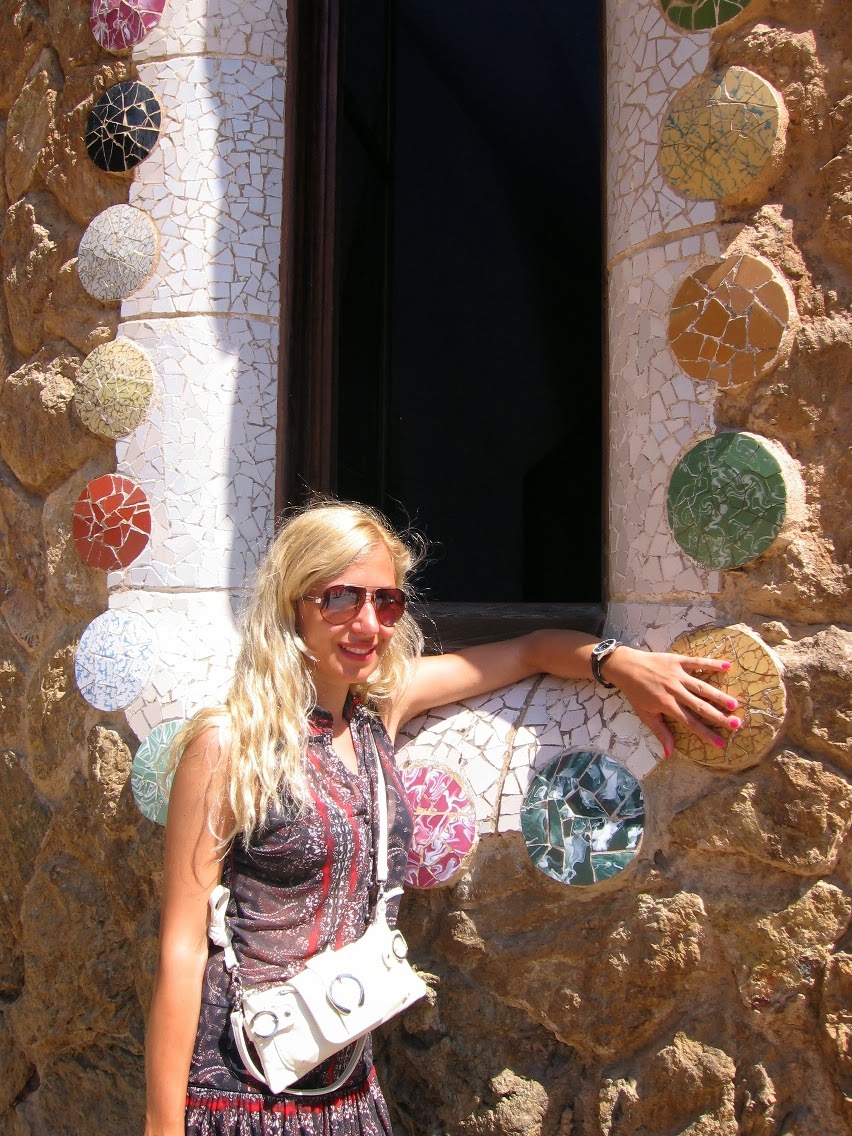
Barselona je poznata kao metropola modernizma. Grad u kojem je živeo i radio arhitekta Antoni Gaudi, sadrži i njegova najreprezentativnija dela, koja godišnje privlače milione turista iz celog sveta. Najpoznatije delo arhitekte i ujedno najposećeniji arhitektonski objekat u Španiji je katedrala Sagrada Familija (Sveta porodica), koja je ostala nezavršena posle njegove smrti i još uvek se gradi. Predviđa se da će biti završena oko 2020. godine. Druga poznata dela ovog arhitekte su kompleks Park Guelj, gde je arhitekta i živeo poslednjih dvadeset godina svoga života, kuća Mila (Casa Milà), poznatija pod imenom La Pedrera i kuća Batljo (Casa Batlló). Osim dela arhitekte Gaudija, tu su još i drugi biseri katalonskog modernizma kao što je bolnica San Pau i Palata muzike (Palau de la Musika), arhitekte Ljuisa Dumeneka i Muntanera.
Osim modernizma, možemo sresti i istaknuta dela drugih istorijskih perioda. Iz srednjevekovnog perioda vredno je istaknuti dela gotike, koja su prisutna u starom gradu i po kojima je i cela jedna četvrt dobila ime, Bario gotiko. Njemu pripadaju katedrala Santa Eulalija, bazilika Santa Marija del Mar (karakteristična po harmoniji i čistoći forme) i crkva Santa Marija del Pi koja se nalazi na istoimenom trgu (Plasa del Pi).
Iz savremene arhitekture treba naročito istaknuti nemački paviljon (Paveljon aleman), nemačkog arhitekte i dizajnera Ludviga Mis van der Roea, koji je konstruisan 1929. godine u svrhu internacionalne izložbe, svetskog događaja čiji je domaćin te godine bila Barselona. Tu su još i Zadužbina (fondacija) Huana Miroa i Paviljon Republike (1937) katalonskog arhitekte Đuzepa Ljuisa Serta i Muzej savremene umetnosti (MAKBA) američkog arhitekte Ričarda Mejera.